
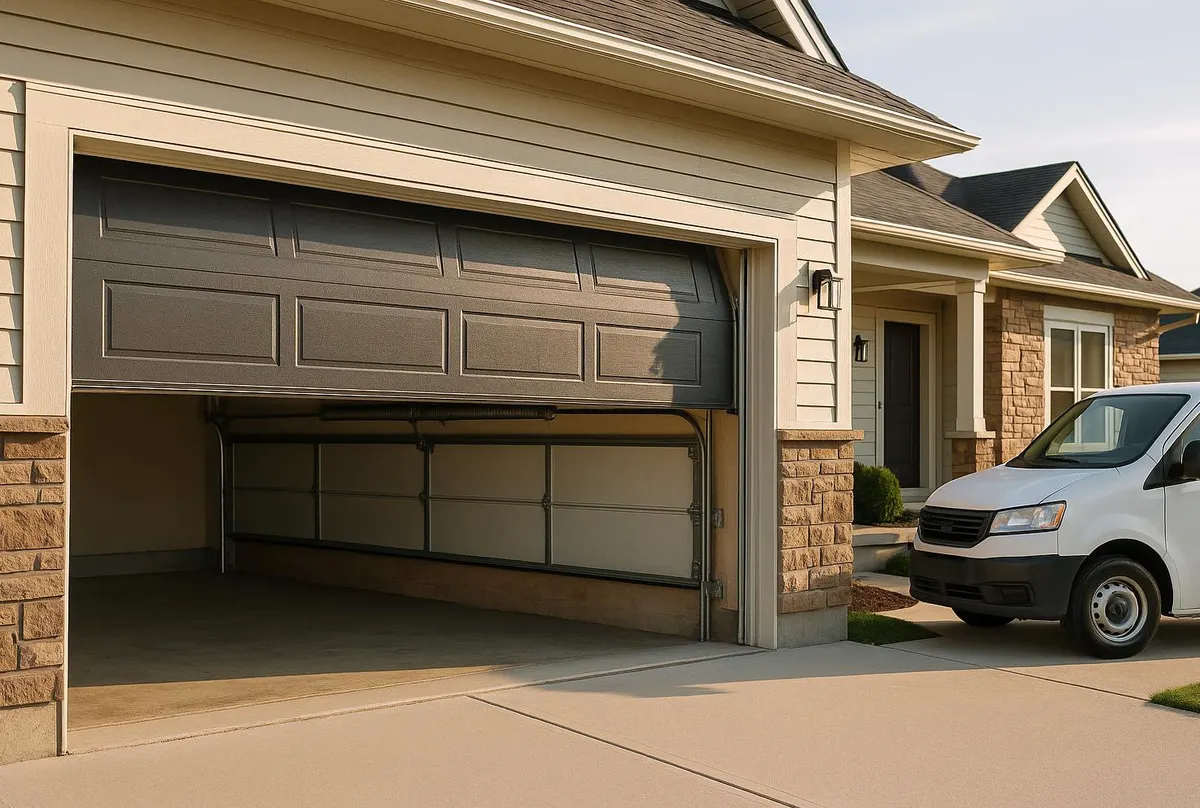
What a Technician Sees on the First Cold Call of the Season
Every year it's the same pattern: the first hard frost hits, and the calls start coming in. A homeowner tries to open the garage door on a 28-degree morning and it barely budges, or it groans halfway up and stops. Sometimes it's a loud bang from the garage overnight — a torsion spring letting go. Sometimes it's a door that looks fine but won't seal at the bottom anymore, letting in a draft you can feel standing in the kitchen. None of this is random. Cold weather, road salt, and the freeze-thaw cycles that define a New Jersey winter put real stress on hardware that worked just fine all summer. A little attention now, before the first real cold snap, prevents most of these calls.
What Cold Actually Does to a Garage Door System
Metal contracts in the cold, which changes the tension and flex of every moving part on the door. Torsion springs, already under constant load, become more brittle as temperatures drop — a spring that was already fatigued from years of cycling is far more likely to snap on a cold morning than a mild one. Opener chains and belts tighten slightly. Rubber and vinyl weatherstripping hardens and loses its flexibility, which is exactly when it starts cracking instead of compressing. None of these are winter-only problems, but winter is when they show up.
Check the Weatherstripping and Seals Before the First Hard Freeze
The bottom seal, sometimes called the astragal, is the first thing to fail. Once it cracks, two things happen: cold air pours in under the door, and meltwater from snow or ice tracked in by car tires can seep underneath and refreeze overnight, effectively gluing the door to the concrete. If you can see daylight under the door anywhere along its width, or the seal feels stiff and cracked rather than pliable, it's worth replacing before the season gets going. Older homes with slab floors that don't pitch well toward the driveway are especially prone to this, since water has nowhere to drain and just sits at the threshold.
Springs: The Part Winter Breaks Most Often
Torsion springs are under tension around the clock, and cold makes the steel less forgiving. Add in moisture from melting snow and road salt, which accelerates rust at the coils, and you've got the single most common winter failure point. A few warning signs worth watching for: the door suddenly feels heavier when you lift it manually, it opens unevenly or jerks partway through its cycle, or you hear a loud pop from the garage that isn't the house settling. On older original doors, where both springs have been cycling for the same number of years, it's usually worth replacing them in pairs rather than one at a time — they tend to be close to the same age and wear at a similar rate, so fixing one often means the other isn't far behind.
Lubrication and Hardware Rust from Salt
Road salt doesn't stay on the road. It rides in on tires, gets kicked onto tracks and rollers, and mixes with driveway de-icer that splashes up near the bottom hardware. Over a winter, that combination eats away at unprotected steel. Rinse tracks and hardware with water occasionally through the season, dry them off, and apply a garage-door-specific lubricant — not a general all-purpose spray, which tends to attract more grit than it repels. While you're at it, look at the rollers themselves. On older housing stock with original steel rollers, flat spots and rust pitting are common and make for a noisier, rougher-running door exactly when you want it working smoothly.
Opener and Sensor Checks Before the Storms Arrive
If the opener has a battery backup, this is the time to test it, not during a nor'easter when the power's already out. Cold weather also reduces remote and keypad battery performance, so weak batteries that seemed fine in September may fail by December. Check the safety sensors near the bottom of the tracks — they're low enough to get bumped by a snow shovel or knocked out of alignment by a snowblower, and a misaligned sensor will stop the door from closing at all. Finally, find the manual release cord and actually pull it once to make sure it moves freely. You don't want to be locating it for the first time by flashlight during a power outage.
Older Doors Need a Second Look
A lot of homes in this area still have original wood panel doors or early steel doors that have never been upgraded. Wood swells with humidity and then contracts and cracks as the air dries out in heated garages — check panel seams for new gaps. Older uninsulated steel doors get more brittle in the cold and dent more easily from accidental bumps. If the garage shares a wall with living space, an insulation retrofit or a newer insulated door can noticeably cut down on how much cold transfers into the house, on top of holding up better against wind-driven nor'easter gusts.
When to Call Bordentown Garage Door
If the door feels heavier than normal, hangs crooked, or you hear a spring go, that's not a DIY fix — a broken or weakened torsion spring under tension is dangerous to handle without the right tools, and that's exactly what our Spring Replacement service is for. If things are running fine but you want to head off problems before they start, a Preventive Maintenance visit covers spring tension, hardware condition, lubrication, opener settings, and weatherstripping in one trip, so small issues get caught while they're still small. We serve Bordentown, Hamilton, Chesterfield, Mansfield, Burlington, Florence, Fieldsboro, and Crosswicks, and we show up on time and explain what we find before we touch anything.
If your garage door is giving you trouble ahead of the cold, or it's just been a while since anyone's looked at it, call Bordentown Garage Door today and get it sorted before the next nor'easter rolls through.